A lot has changed since I last published a post here. Back in July 2025, my family and I packed up our apartment in Center City Philadelphia and moved to Portland, OR. Portland is my hometown, so my expectation was that the transition would be pretty smooth. And honestly, while the number of logistical bumps were few, the truth is that the amount of uncertainty, discomfort, anxiety and adjustment was still monumental. It’s been 16 months now and I feel like I’m only now starting regain my equilibrium.
I didn’t do much canning the first summer I was here because we were living in a temporary apartment with a tiny kitchen and I was without most of my gear (our stuff stayed in storage until we knew where we would land for good). I would occasionally take over my mom’s kitchen (our rental was through their backyard and down a short walkway) to transform the grapes and apples friends gave me from their excess, but I was not actively seeking out preserving projects.
Thankfully, our Philly apartment finally went under contract in early December 2025 and we were able to start looking for a house to buy. Our kids had started school in Portland’s Parkrose district and so we kept our search to this area so they wouldn’t have to adjust to yet another school (it was the right decision). We found our house, closed in late January, and finally moved in mid-March (after a couple big repairs were completed).
After spending the entirety of my adult life in a high rise apartment, reacclimating to a house has been an ongoing process. When we first moved in, I unpacked just to get rid of the boxes. Now I’m redoing every closet and cupboard to make them functional. I’m still figuring out how best to work in the kitchen.
The yard came with a handful of mature fruit trees (Italian plum, fig, Fuyu persimmon, Asian pear, and a massive kiwi vine) as well as ten raised garden beds. My dad and I put in a big garden that did surprisingly well for our first year here. I spent a lot of the summer feeling overwhelmed and doing a wildly imperfect job with the fruit and veg that was pouring forth.
I spent a lot of late summer and early fall making fig jam. I have gotten to know a handful of my neighbors and twice now, Kirk from down the street has brought me figs from his backyard trees. Each time, it has been a bag or box groaning with figs. I did an imperfect job weighing the quantities but my best guess is that the total was somewhere around 16 pounds. Add that to the 20 pounds my own tree produced and the flat I bought at our local salvage grocery store (before I knew that I was about to be inundated) and it has been a lot of figs. I never imagined I’d be in a position where my desire for figs would be fully satiated, but this summer I learned it was possible.
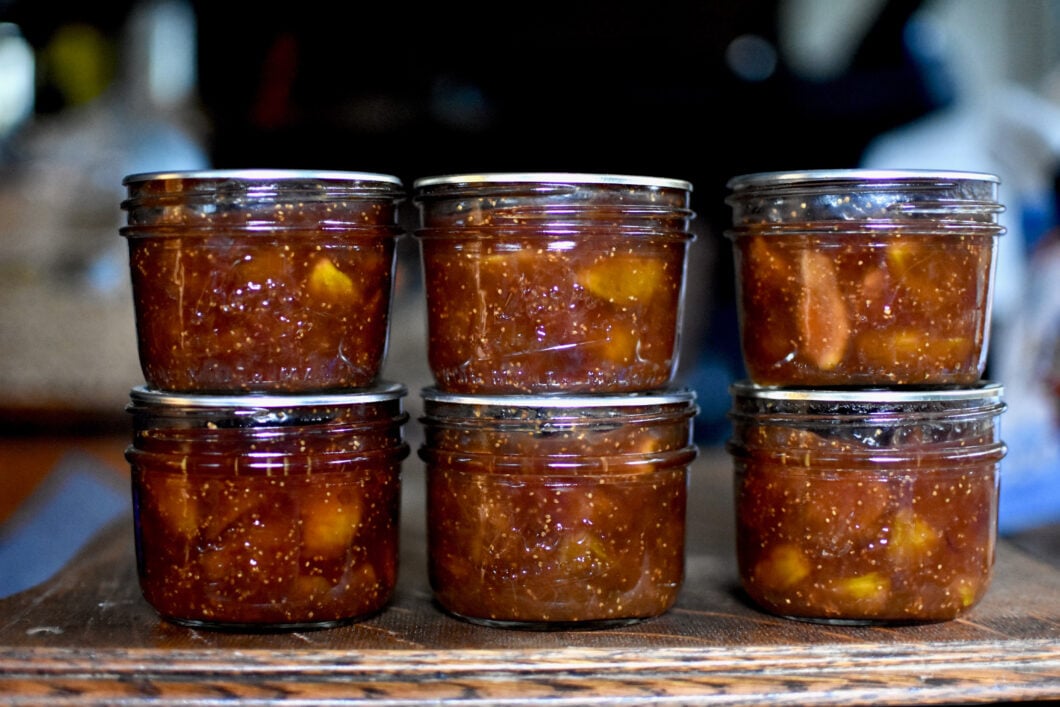
Given that I had so many figs, I made a point of trying some new-to-me flavor combinations. I did one with ground cardamom that was good. Another with black pepper and balsamic vinegar which was good. But my favorite was this salted vanilla fig jam one, that combines a lemon, vanilla bean paste, and just 1/2 teaspoon of kosher salt. There is something about that small addition of salt that just brightens and calibrates every other flavor in the jam. The vanilla becomes robust, the figs are somehow figgier and the lemon is present but not overwhelming.
Now, I realize that fig season is nearly or completely done for most folks right now. But I needed to find my way back here and get and writing about a recipe that I’ve made three times and have come to love seemed like the right way to do it. Even if you will need to bookmark this recipe for next year.
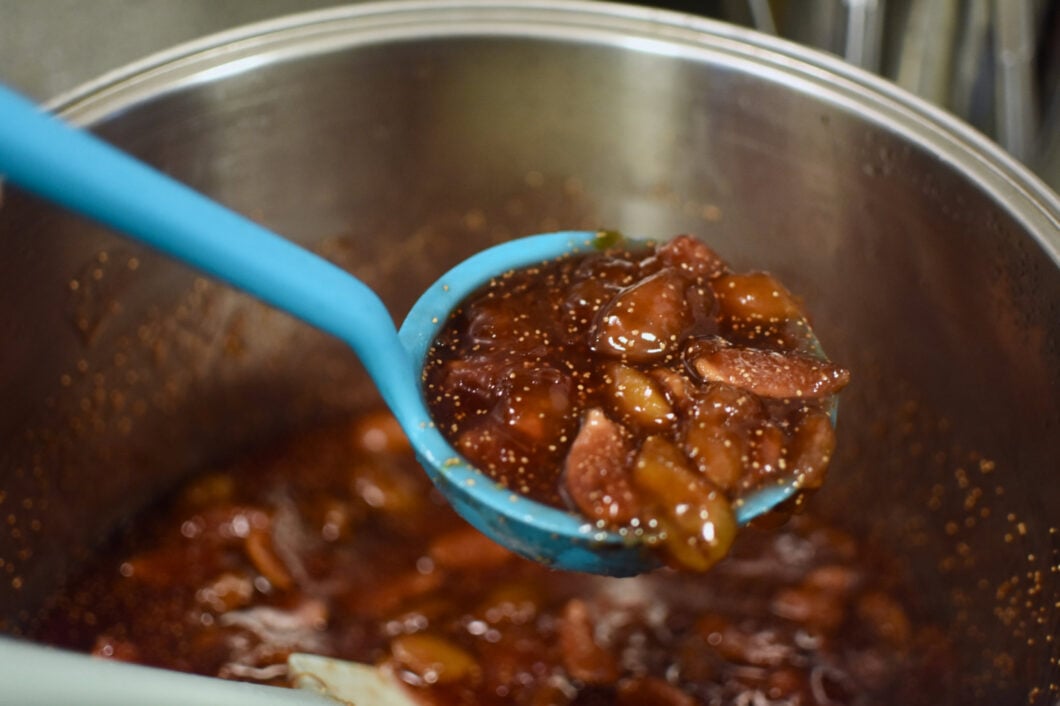
If you’ve made any of my other fig preserves in the past, this one will feel familiar to you. I always use two parts figs, one part sugar, and two tablespoons of lemon juice for every pound of fig I start with. Figs are lower in acid than many other fruits and so require a generous amount of lemon juice to ensure that they are safe for canning. Typically we use bottled lemon for acidification, but in this situation I find that since are using so much, it is better to use fresh lemon. I use double the amount called for to ensure that a safe pH is achieved.
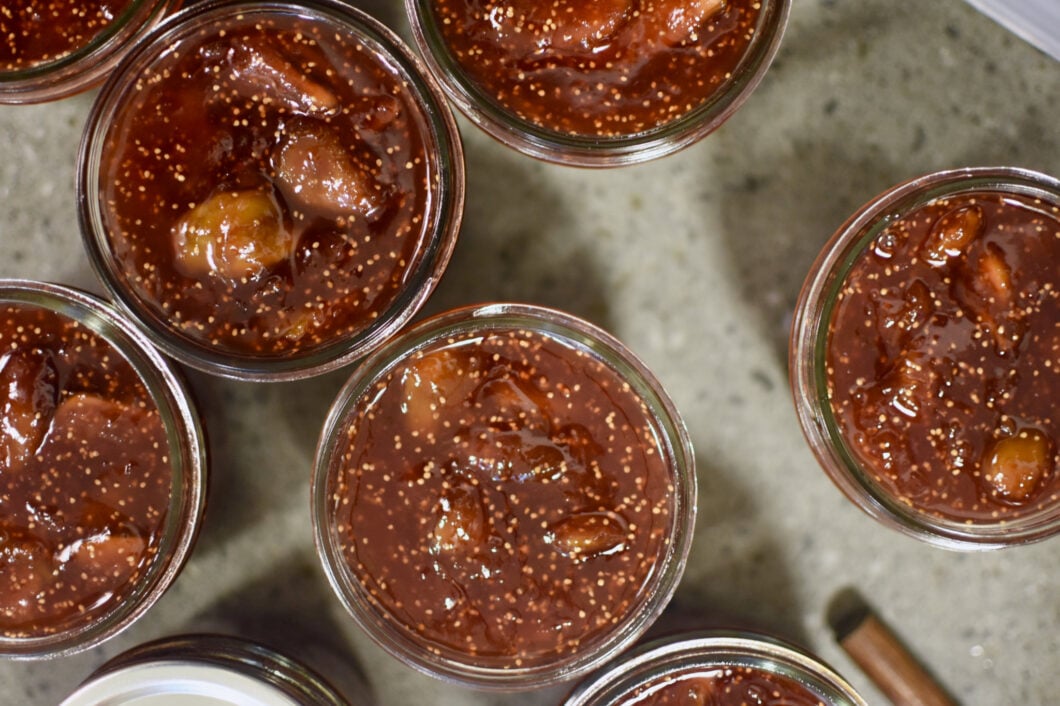
Salted Vanilla Fig Jam
Ingredients
- 3 pounds fresh figs
- 1.5 pounds granulated sugar
- 1/3 cup fresh lemon juice
- 1 tablespoon vanilla bean paste (extract will not convey the same level of flavor)
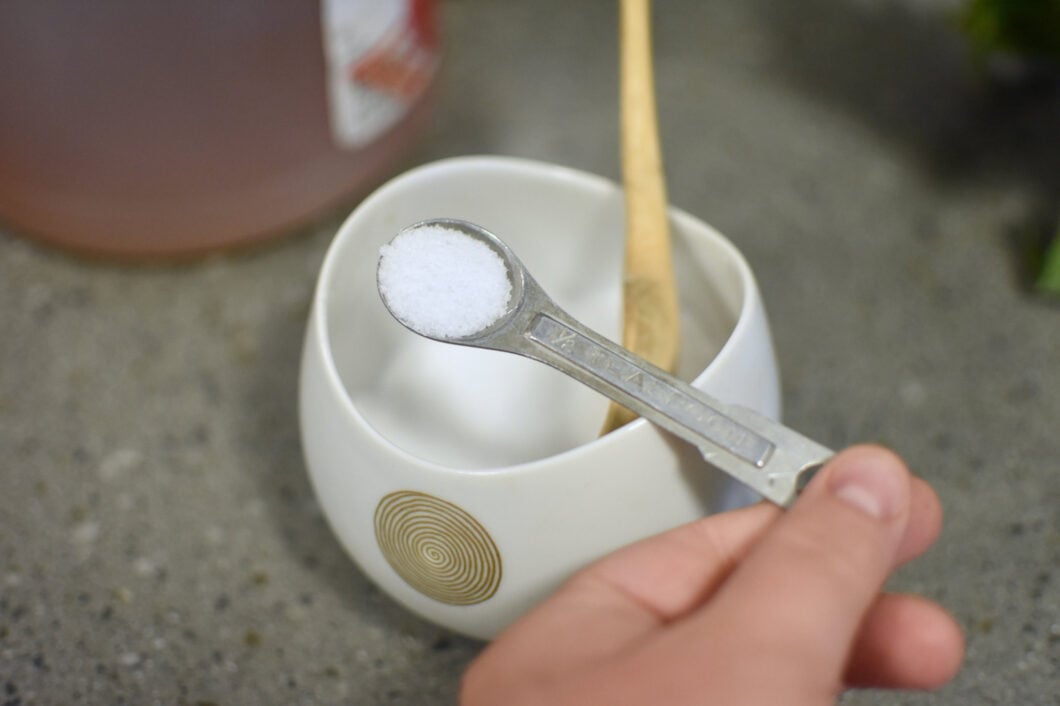
- 1/2 teaspoon kosher salt I use Diamond Crystal
Instructions
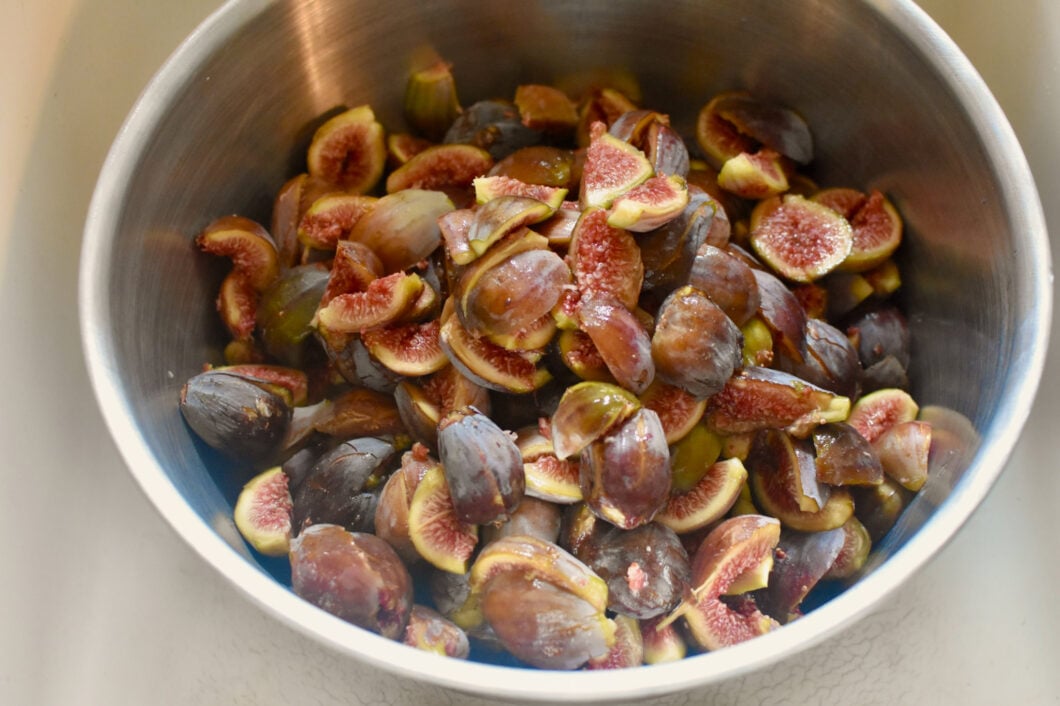
- Wash the figs. Cut away the woody stems and quarter them.
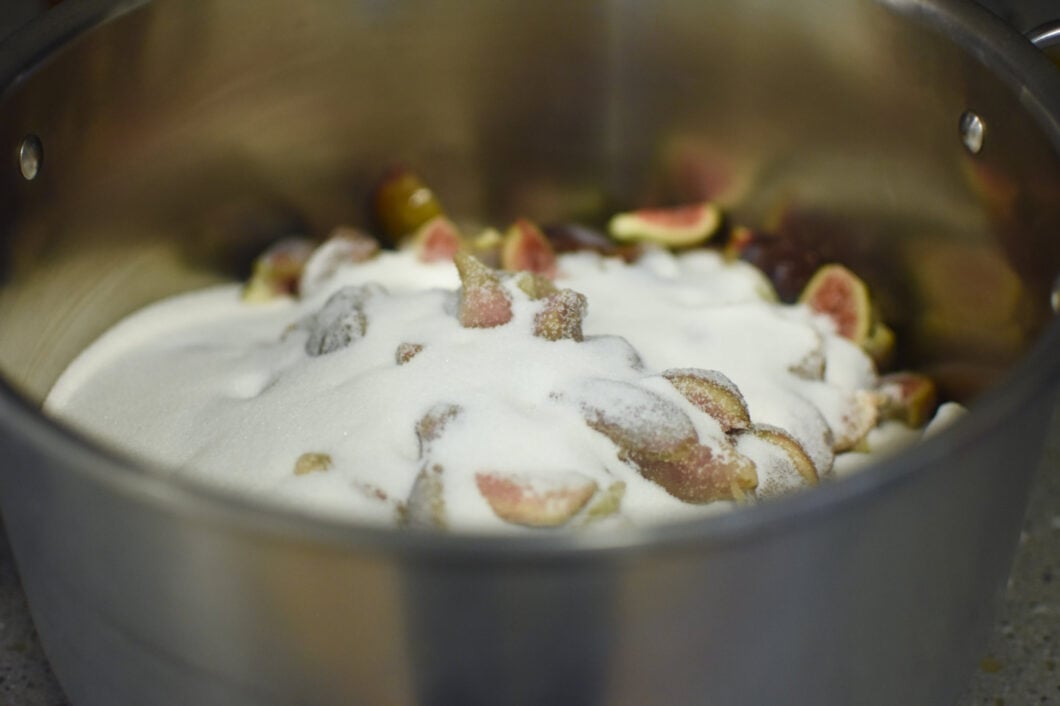
- Place the prepped figs in a large container and add the sugar. Stir to combine. Let the figs and sugar macerate for at least 1 hour and up to 24 hours. If opting for a longer rest period, place the container in the refrigerator until ready to use.
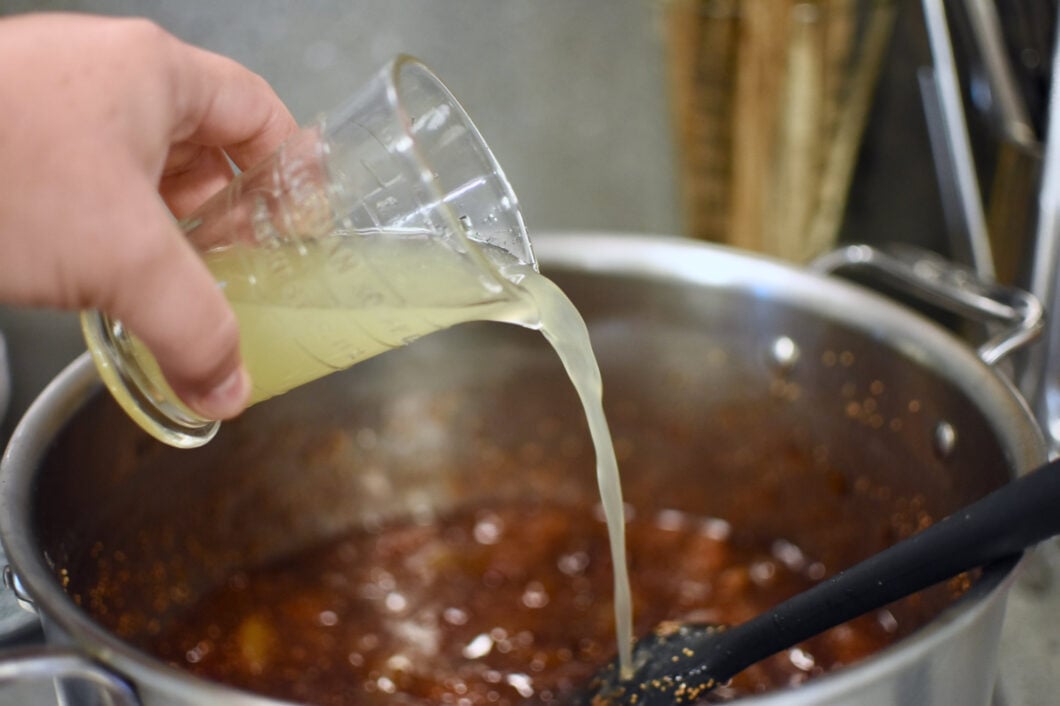
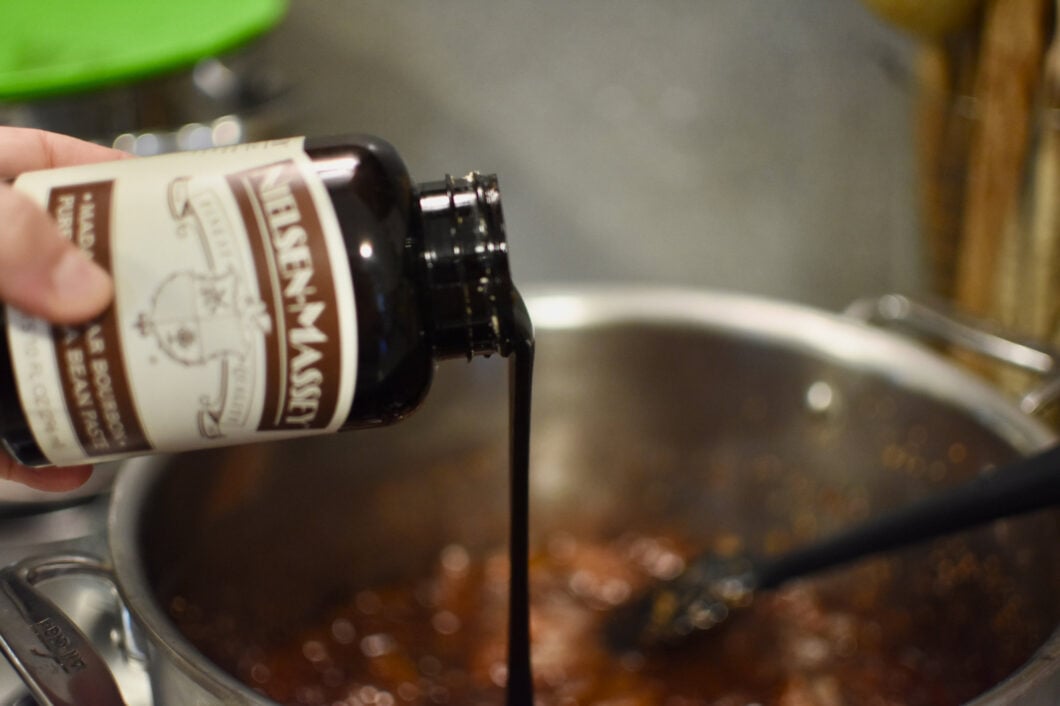
- When you are ready to cook the jam, scrape the figs and sugar into a low, wide, non-reactive pan. Add the lemon juice, vanilla bean paste, and salt and stir to combine.
- Place the pan on the stove and set the burner to high. Bring the figs to a boil. Once boiling, reduce the heat to medium high. You want to keep the figs cooking at a controlled boil. Stir every 1-2 minutes to prevent sticking.
- While the fig jam cooks, prepare a boiling water bath canner and enough jars to hold approximately 3 pints of product. A combination of pints, half pints, and quarter pints is fine. Wash new lids and rings in good condition in hot, soapy water. Set aside to dry.
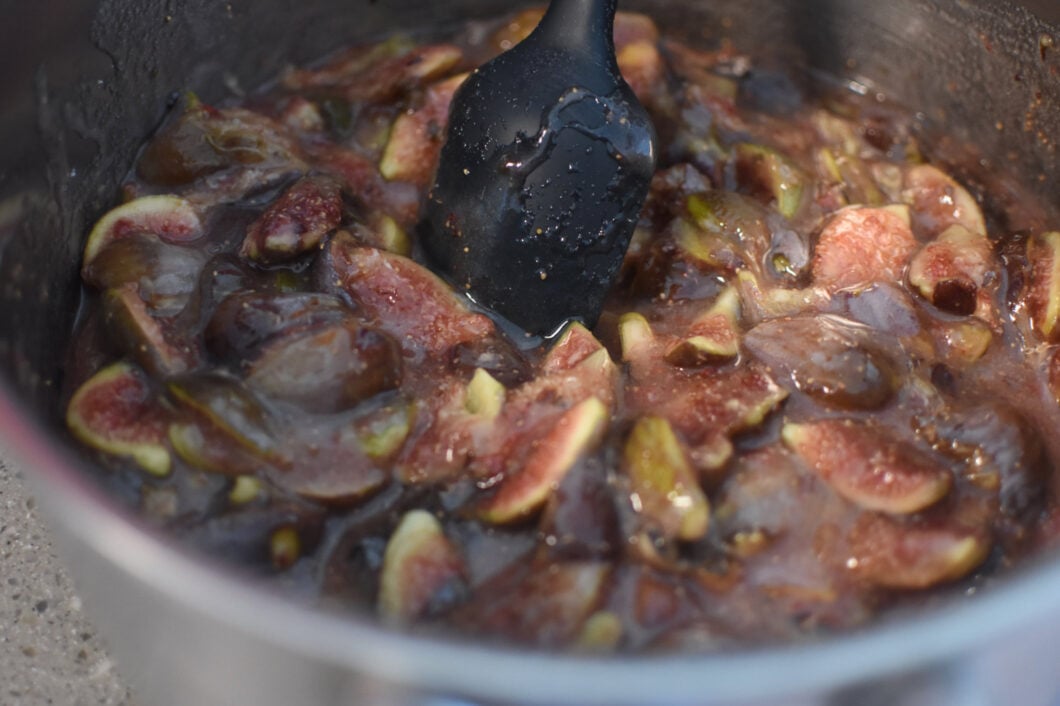
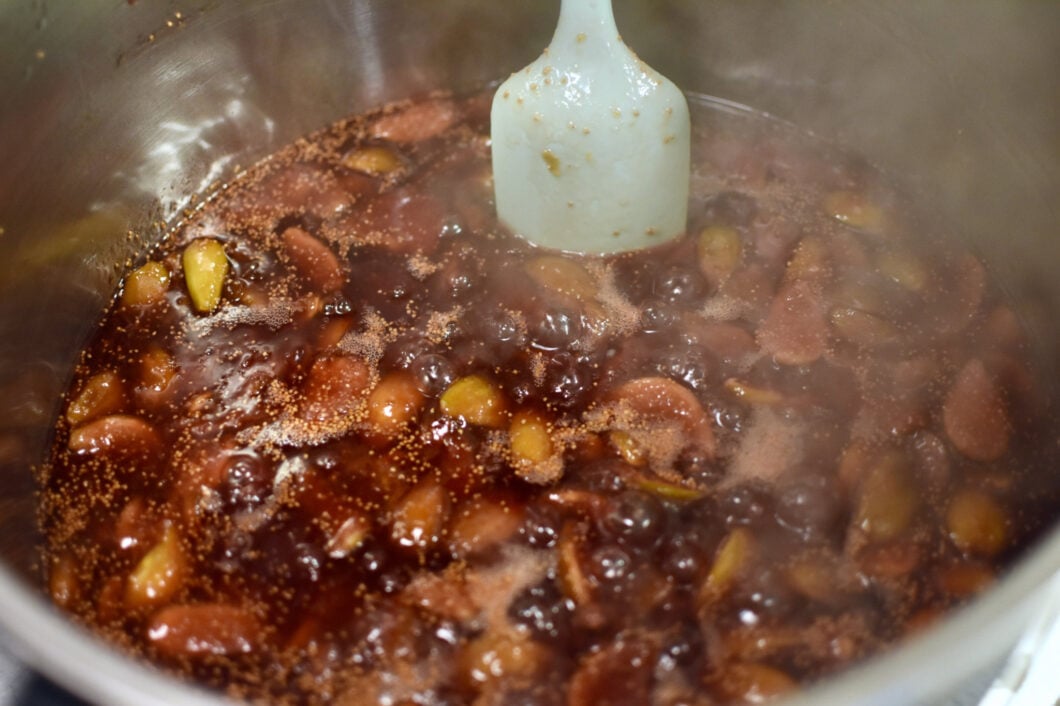
- The cooking time will vary for this jam, but I start looking for signs of set after it has boiled for 15 minutes, though it may need up to 30 minutes of cooking. You will know that it is done when it starts feeling thicker as you stir. The color will go red and rosy. The pieces of fig will start to look a bit translucent. And the overall look will be very glossy. I also like to hold my stirring spatula up over the pot and watch how the droplets cascade off of it. Drops of jam that are thick based and slow moving indicate jam that is reaching set.
- When you have determined that your jam is finished cooking, remove the pot from the heat. Funnel the finished jam into the prepared jars, leaving approximately 1/4 inch headspace. Wipe the rims clean of any drips, and apply the lids and rings.
- Process the jars in a boiling water bath canner for 10 minutes (starting timer once the water has returned to a boil and not before). When processing time is up, turn off the heat, remove the lid and let the jars cool in the water for five minutes.
- When that time is up, remove jars and set them on a folded kitchen towel to cool. When the jars have cooled enough that you can comfortably handle them, check the seals. Sealed jars can be stored at room temperature for up to a year. Any unsealed jars should be refrigerated and used promptly.
This is not my only fig offering. I’ve also a classic three ingredient fig jam, fig meyer lemon marmalade, fig mostarda (I meant to make this one this year and then never managed to make it happen), fig jam with pectin, and a small batch strawberry fig jam.

I’m looking forward to trying this recipe next year. I’ll have to get my fruit from TJ’s, though. Having moved from Portland (Hillsboro, actually) to a Chicago suburban apartment, I really miss my fig trees, Stanley plum, grape vine and berries, along with the raised beds and chickens! We loved to use our dehydrator for a good portion of the figs, apples and plums (how much apple butter is too much?)
When I was travelllng in Norway last year, I enjoyed a chunky apple jam that I haven’t seen in the States. I’m not usually a big cooked apple fan, but this was delish! Any thoughts or suggestions?
That transition from Hillsboro to the Chicago suburbs must have been a big one! As far as apple jam goes, I have found that the best way to do it is to cook apples down into sauce first and then add the sugar, lemon juice, and spices. If you add sugar directly to uncooked apples, it draws out their moisture and leaves really hard bits of apple.
Welcome back!
We are not enthusiastic fig eaters in my family but, heck, I’ll give it a try. My daughter has an Italian plum tree and we make plum jam every year, among all the other options. This year I made a batch of plum and blackberry (I mean, those berries are everywhere!). I cooked the berries enough to start them breaking down and then pushed them through a sieve to get the majority of the seeds out. Turned out so well!
I am looking forward to seeing more of your preserving journey, you’ve always been an inspiration.
Italian plums make the best jam!
Welcome back! It’s nice to see you again.
Thanks so much!
Boy do I relate to this. Its been a few years since I’ve been able to can anything due to mom life and even longer since I stepped away from blogging. All this to say, congrats on being back to it and your new home! I hope I can make one of your awesome recipes soon
Thank you so much! It’s really good to be back! And yes, it’s so hard when life changes.
Sounds lovely….is it ok to use Meyer lemon juice? Not sure about acidity. I follow a permaculture yt that also in parkrose. Glad to see you back!
Unfortunately, Meyer lemons aren’t a good choice when you need the lemon juice to provide a solid dose of acid. They are not as acidic and so aren’t as reliable.
Good to hear from you again! I am trying to grow a fig tree from a clipping (I am on year 3), and 2 weeks ago a deer ate the few figs on it and scraped the bark on the tree. Take care and happy canning!!
Welcome home to Portland! This jam sounds so lovely. My neighbor has offered her figs, but I think we’re past the season now (I was away for a couple weeks). I look forward to making this next year. Thank you!